Special Offer
Why Different Upholstery Fabrics Need Different Cleaning Methods
A coffee spill on a polyester sofa and a linen armchair may look exactly the same. But using the same cleaning product on both pieces could remove one stain while leaving a water ring or damaged texture on the other.
The difference is not simply the fabric name. Dyes, finishes, cushion construction, and previous cleaning attempts can all influence the result.
Start by checking the care code, identifying the fabric, and determining whether the mark is removable soil or permanent material damage. This separates a cleanable spill from a problem that more moisture or agitation could make worse.
This guide applies that framework to microfiber, polyester, linen, and velvet, then explains how Kendall's humidity affects drying.
Same Coffee Spill, Different Cleaning Decisions
Consider two hypothetical situations involving a similar coffee stain.
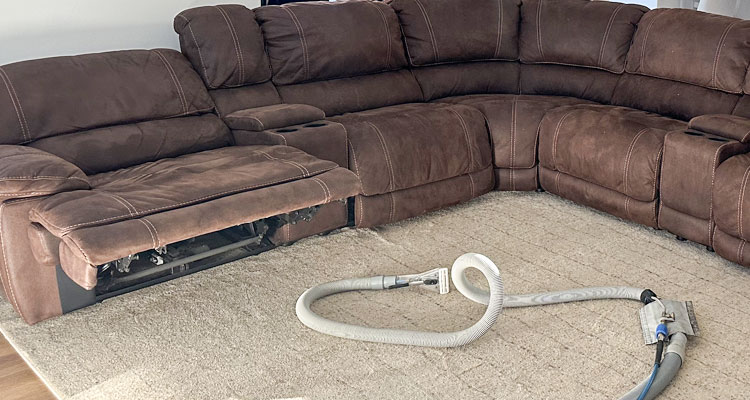
A polyester sectional: The fabric permits water-based cleaning, but the coffee contained milk and sugar. Removing the visible discoloration may leave sticky residue behind. A suitable cleaning process needs to address the remaining contamination as well as the visible mark.
A linen armchair: The fabric is moisture-sensitive, and someone has already applied household detergent. Additional water could spread the residue, leave a larger ring, or alter the fabric's texture.
Controlled water-based treatment may be appropriate for the polyester sectional. The linen chair may require a different, manufacturer-approved method.
Repeated spot cleaning can make a later cleanup harder because each product may leave residue that spreads, attracts soil, or reacts poorly with the next attempt.
What Upholstery Cleaning Codes Actually Mean
Before applying a cleaning product, locate the manufacturer's care label. It may be attached beneath the furniture or to a removable cushion.
Many upholstered pieces use cleaning codes to identify permitted cleaning methods.
| Code | General Meaning |
|---|---|
| W | Water-based cleaning products may be permitted |
| S | Water-free solvent cleaning is specified |
| W/S or S/W | Either suitable water-based or solvent-based cleaning may be permitted |
| X | Vacuuming or light brushing only; no liquid cleaners |
These codes are a starting point, not a guarantee that every treatment within a category is safe.
For example, a W code does not automatically mean a household steam cleaner or hot water extraction machine is appropriate. The manufacturer's complete instructions take priority.
For more detail, see La-Z-Boy's official fabric and leather care guidance.
If a label is missing or unclear, contact the furniture manufacturer when possible rather than guessing from appearance.
Microfiber: Why Water Rings Can Spread
Microfiber is common on sofas and sectionals, but not every microfiber covering has the same cleaning requirements.
Some fabrics permit water-based products. Others require solvent-based care.
A typical problem is a ring that appears after a small spot has been treated. Moisture can move dissolved soil or cleaning residue beyond the original stain, making the affected area appear larger after drying.
Adding more cleaner without identifying the cause may spread the mark further.
When considering how to clean microfiber upholstery, focus on preventing a small spot from becoming a larger ring. Vacuum loose debris with a suitable attachment, blot fresh spills gently, and do not keep wetting the center of a dried ring because that can move residue outward.
Avoid repeated scrubbing, which can affect the surface texture.
Polyester: Why Armrests and Cushions May Need Different Treatment
Polyester is often a durable upholstery fiber, but that does not mean every polyester sofa can tolerate aggressive cleaning.
Consider a sectional with darkened armrests and relatively clean seat cushions.
The armrests may contain body oils and residue from repeated contact, while the cushions hold mostly crumbs and dry debris.
Although both areas are made from the same fabric, they present different cleaning problems.
When deciding how to clean polyester upholstery, pay special attention to high-contact areas. Detergent left in oily armrests can attract new soil, causing the darkened look to return even when the fabric initially appears cleaner.
Linen: When Cleaning Creates a Larger Mark
Linen upholstery may be sensitive to moisture, agitation, and uneven drying.
Improper treatment can cause water rings, shrinkage, or texture changes.
Imagine a small drink stain on a linen dining chair. Repeatedly applying water may spread the visible mark rather than remove it.
For homeowners researching how to clean linen upholstery, restraint is often the safest immediate response. Repeated wetting can create a wider boundary that is more noticeable than the original spot.
Routine vacuuming helps remove loose dust. Fresh spills should be blotted carefully with a clean white cloth instead of rubbed.
If an older stain has already been treated, stop layering household products. Mixed residues can spread during the next attempt and make an even result harder to achieve.


With over 18 years in business, we're fully insured, eco-friendly, and top-rated on Google.